It is as vital to know how the organization spends its funds as it is to discover where the funds originate. Transparency in expenditures establishes confidence in donors and others and the community by simulating a way in which resources are allocated for meaningful impacts. It philosophically presents the financial information behind it being community-centered and people-focused.
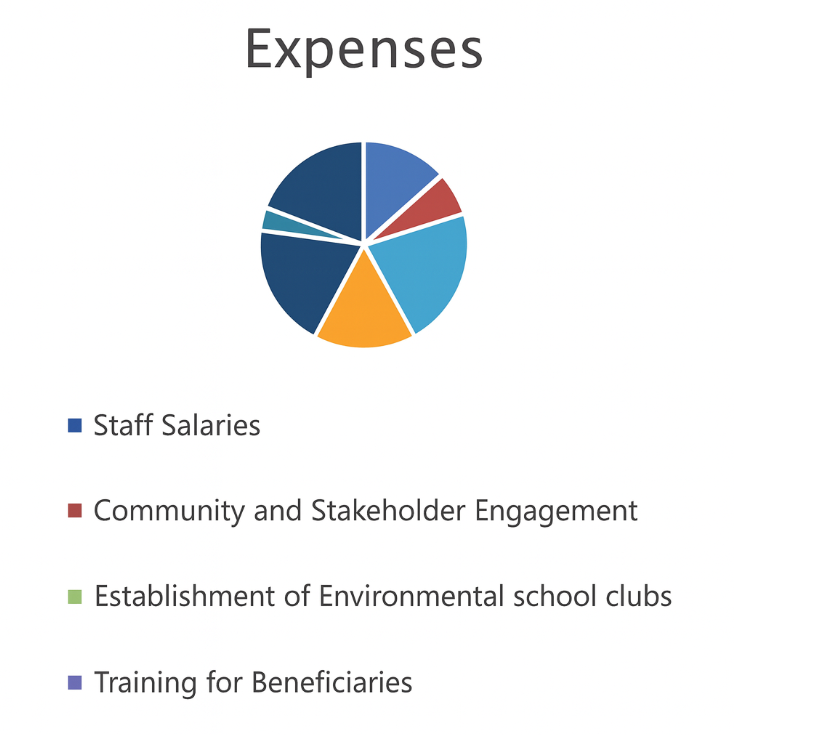
A Glance at Organizational Expenses
That segmental expense analysis is indicative of the organization putting up a higher premium on human resources, capacity strengthening adjunct community engagement. This salary allocation shows funds applied on staff salary; training of stakeholders; stakeholder engagement activities; and constitution of environmental school clubs. This balance between operations and programs would ensure stability in operations and effective programming.
Anything Major that Salaries Would be Charged on to.
The money to be salary is one that would definitely hold all the best trained staff possible, highly motivated and carrying a lot of professionalism; such would then seem an investment on risk to be taken in servicing delivery and sustainability of a nonprofit organization. The activities have to be planned, organized, and executed by the staff to ensure actual deliveries of any services.
On its part, an organization, through
Talent retention, lower employee turnover, and maintenance of institutional memory usually feature reasonable and competitive salaries.
Training Beneficiaries: The Past Shapes the Future
This expenditure is already one of the most massive expenditures for developing skills training for beneficiaries. The training is for developing skills to establish awareness and empower the beneficiaries so that they have applicable knowledge in transforming their environment.
Investments in capacity building would bring the organization to contribute to sustainable development results and not only short-term alleviation.
Community & Stakeholder Engagement
Engagement with a wider community and with stakeholders is another critical area. These would, therefore, cement relations with local communities, partners, and other stakeholders ensuring that programs remain inclusive, relevant, and addressing current needs.
Engagement equals collaboration, accountability, and trust in establishing an effective impact.
Establishment of Environmental School Clubs.
Not a big expenditure item but a very important one in establishing school environment clubs. The activities will generate an awareness campaign, organize environmental education, and engage youth in environmental protection.
Although this category commands a relatively small budget share, its importance is long term and strategic, as it advocates the youth for environmentally responsible conduct.
Why This Expenditure Pattern is Important
It simply shows that these expenditures are strategically balanced between operations and delivery of programs. Heavy emphasis on people, training, and community engagement will maximize both efficiency and accountability of funds being advanced for such purposes.
Moreover, this expense structure assures improved operational capacity, sustainability outcomes of programs, and high community acceptability to the organization, hence, transform the society and environment permanently in terms of reality.
Conclusion
The expenditure distribution reflects the conscious and open spending processes. Salary accounts for the largest portion, then training of beneficiaries, and community impact in terms of people-driven intention. The active environmental school clubs commitment tagged on this gives little room for future generation involvement.
Such accountably managing expenditures augments the credibility of the organization and ensures that contributions translate into real measurable change.