Severe Drought Crisis Confirmed in East Galkacyo: Horn Nature Conservation Calls for Urgent ActionGalkacyo, Puntland – February 2026
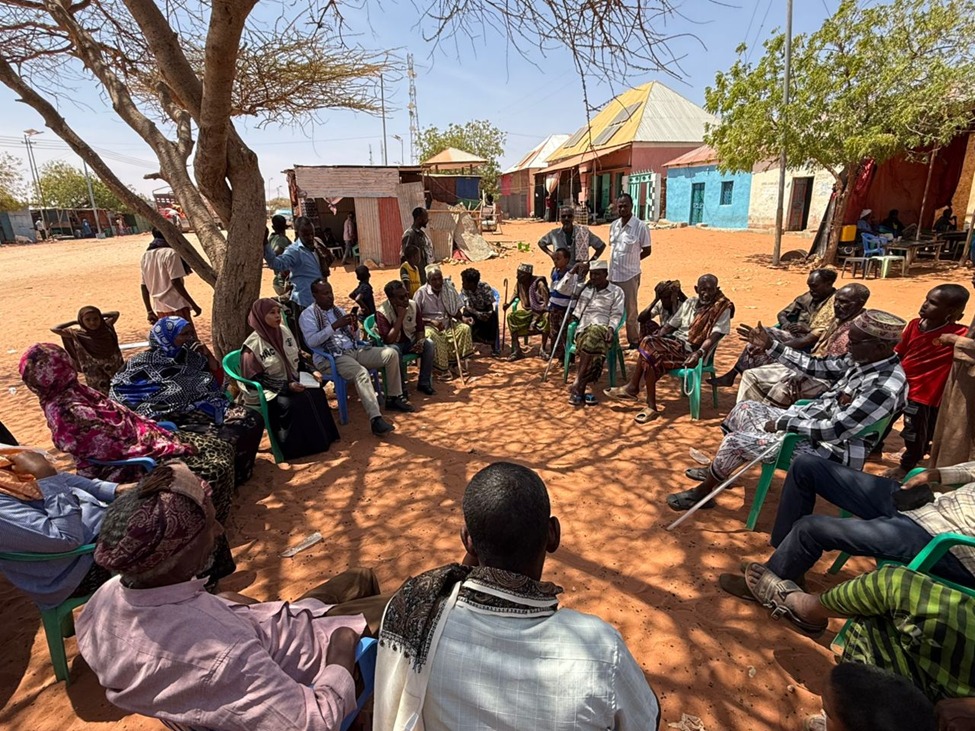
Horn Nature Conservation (HNC) has completed a rapid drought assessment in the villages of Godod, Gacnofale, and Balibusle, located east of Galkacyo District, confirming a severe and escalating humanitarian crisis affecting approximately 400 households in the region.
The assessment, conducted from 7th to 9th February 2026, reveals that three consecutive failed rainy seasons have resulted in widespread water depletion, livestock mortality, food insecurity, rising malnutrition, and deepening economic hardship across pastoral and agro-pastoral communities.
Water Crisis Reaches Critical Levels
Nearly all traditional water reservoirs (Berkads) have completely dried up, and shallow wells are no longer functional. Communities now depend almost entirely on a limited number of boreholes, which are operating under severe stress due to overuse and declining groundwater levels. Water prices have increased significantly, placing additional financial burdens on already vulnerable households.
Livelihood Collapse and Food Insecurity
The assessment confirms significant agricultural decline, with crop production in some areas falling by approximately 70%. Livestock—traditionally the backbone of household income and nutrition—are severely weakened due to pasture scarcity and water shortages. Milk production has sharply declined, directly affecting children, pregnant women, and lactating mothers.
Local markets, particularly in Balibusle, have slowed dramatically, with reduced trade activity and rising debt among families. Community leaders reported increasing cases of households going entire nights without food.
Health and Education Under Strain
Local health facilities are facing shortages of essential medicines and therapeutic nutrition supplies, while cases of acute malnutrition are rising. Waterborne diseases and respiratory infections are increasing due to poor water quality and extreme temperature fluctuations.
Education has also been disrupted. School enrolment has declined, dropout rates have increased, and the suspension of school feeding programs has further affected attendance and student wellbeing.
Environmental and Social Impacts
Environmental degradation is visibly worsening across the semi-desert landscape. Shrub vegetation has thinned, grazing areas are depleted, and wildlife has increasingly moved closer to settlements in search of water and forage.
The drought has also intensified social strain, migration pressures, and competition over scarce natural resources in the broader Mudug region.
Call for Immediate and Coordinated Response
Horn Nature Conservation calls upon humanitarian partners, philanthropists, environmental organizations, and government stakeholders to urgently support coordinated emergency interventions to stabilize affected communities and protect remaining livelihood assets.
Without immediate assistance, continued livestock mortality, worsening malnutrition, and deepening economic contraction may significantly undermine community resilience and recovery prospects—even if rainfall improves in upcoming seasons
Commitment to Action
Horn Nature Conservation remains committed to supporting vulnerable communities through evidence-based interventions and collaborative partnerships that address both immediate humanitarian needs and long-term environmental resilience.