
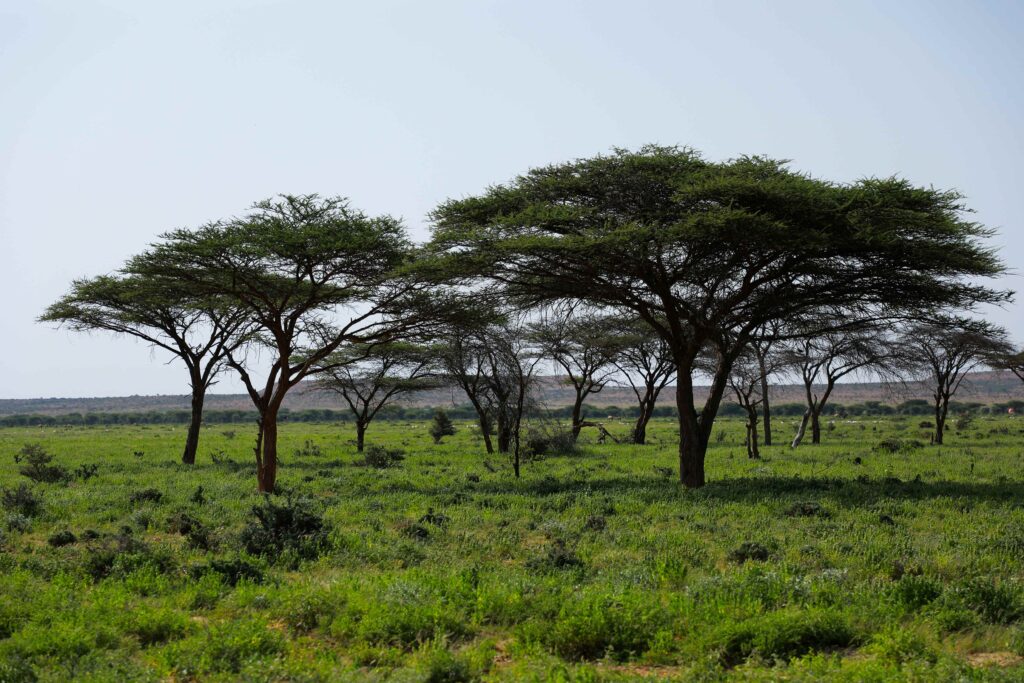
Climate Change  

Climate Change  

Somalia is among the countries most vulnerable to climate change, facing recurrent droughts, floods, desertification, and increasing pressure on fragile ecosystems. These climate shocks disproportionately affect rural communities, smallholder farmers, women, and youth whose livelihoods depend on natural resources. Limited infrastructure, environmental degradation, and prolonged humanitarian crises further intensify climate risks across the country. 

Horn Nature Conservation works at the frontline of climate action by supporting communities to adapt to climate change while protecting the environment and strengthening livelihoods. 

What We Do

  • Climate-Smart Agriculture & Sustainable Farming 
    We promote climate-smart agriculture and sustainable farming practices that increase productivity while reducing environmental impact. This includes improved crop management, diversified farming systems, and environmentally friendly technologies that enhance resilience to droughts and climate variability. 
  • Community Awareness on Climate Risks & Adaptation 
    We raise awareness at community level on climate risks, adaptation strategies, and environmental stewardship. Through training, dialogue, and participatory approaches, we empower communities to understand climate impacts and take locally appropriate action. 
  • Water Conservation & Soil Restoration 
    We support water conservation and soil restoration techniques to combat land degradation and improve agricultural sustainability. Our interventions include rainwater harvesting, efficient irrigation practices, improved soil fertility, and erosion control to restore degraded land. 
  • Agroforestry  
    We promote agroforestry as a sustainable land-use approach that integrates trees into farming systems. In many parts of Somalia, unsustainable cultivation has led to forest clearing, land degradation, and increased climate vulnerability. We work with farming communities to encourage agroforestry and green planting on agricultural lands, restore trees on farms, and promote environmentally responsible practices. These approaches improve soil fertility, enhance biodiversity, strengthen ecosystems, and support long-term agricultural productivity while reducing deforestation.. 
  • Climate-Positive Energy Solutions
    To mitigate climate change and reduce pressure on forests, HNC promotes clean and renewable energy solutions across Somali communities. Dependence on firewood and charcoal remains a key driver of deforestation. Our initiatives focus on expanding access to solar energy for farmers, households, schools, and public businesses, supporting renewable energy for irrigation, lighting, and productive use. These interventions reduce carbon emissions, protect forests, and improve livelihoods while advancing sustainable development. 
  • Partnerships & Stakeholder Engagement 
    We work closely with government institutions, local authorities, community leaders, farmers’ groups, women’s associations, and development partners to ensure inclusive, coordinated, and sustainable climate action. Through strong partnerships, we align community needs with national and global climate priorities.