

Biodiversity Conservation and Community Action: Real Impact, Real Change
By HNC Administrator
Discover how Horn Nature Conservation (HNC) is restoring Somalia's coastal and land ecosystems through community-led mangrove restoration, agroforestry, and wildlife protection proving that lasting biodiversity conservation starts with the people who live closest to the land.
Biodiversity Conservation and Community Action: Real Impact, Real Change
Introduction
Biodiversity conservation and community action go hand in hand. Nature cannot be protected by policies alone. It needs people on the ground — farmers, fishermen, and families — who understand their own land and coastline. In Somalia, this reality is especially clear. Coastal ecosystems are shrinking. Wildlife habitats are disappearing. However, communities are stepping up. At Horn Nature Conservation (HNC), we believe protecting biodiversity works best when local people lead the effort. Since 2018, this belief has guided every project we run.
1. Why Biodiversity Conservation Matters Right Now
Biodiversity loss is not a distant problem. It is happening today, along coastlines and inside farmland alike. When one species disappears, others are affected too. Fish stocks decline. Soil quality drops. Food chains break down.
The Coastal Crisis
Somalia has one of the longest coastlines in Africa. Unfortunately, much of it is under threat. Mangrove forests, which protect the shore and support marine life, are vanishing. As a result, fishing communities are losing a key part of their livelihood.
Land-Based Biodiversity Loss
The problem is not only along the coast. Inland, overgrazing and deforestation have reduced plant and animal diversity. Consequently, farmers face poorer soil and fewer natural resources to rely on.
2. Protecting Coastal Ecosystems: HNC's Approach
Mangrove Restoration and Biodiversity
Mangroves are more than trees. They are a full ecosystem. They shelter fish, filter water, and protect the coast from storms. HNC's Garacad Mangrove Restoration & Coastal Resilience Programme focuses on replanting these forests. Meanwhile, local residents are trained in nursery care and planting techniques. This way, the knowledge stays in the community long after planting ends.
Why Coastal Protection Supports Everyone
Healthy mangroves mean healthy fish populations. Therefore, protecting these ecosystems directly supports the fishing families who depend on the sea. It is not just an environmental project. It is a livelihood project too.
3. Wildlife Conservation and Local Communities
Community-Led Protection Works Best
Wildlife conservation and local communities must work together. Outsiders cannot protect land they do not live on. Instead, HNC trains local people to monitor and manage natural resources themselves. This creates lasting protection, not temporary fixes.
Training Comes Before Tools
Before any equipment or seedlings are given, communities receive training. So, they understand why conservation matters and how to sustain it. This order matters. Tools without knowledge are quickly misused or forgotten.
4. Ecosystem Restoration Projects in Action
Agroforestry and Biodiversity Recovery
Restoring biodiversity is not limited to the coast. HNC's agroforestry program has distributed Moringa and Leucaena seedlings to farmers. For example, Fadumo, a local farmer, saw her land change completely. Before training, her soil was damaged and crops failed often. However, after planting trees and learning new techniques, her farm turned green again. Birds returned to the fields. Soil held moisture longer.
Long-Term Ecosystem Thinking
Ecosystem restoration projects only succeed with patience. Similarly, HNC does not treat any project as a one-time fix. Farmers, fishermen, and cooperatives continue to expand their work years after a project begins.
5. Biodiversity Loss and Conservation Solutions Going Forward
Strong Partnerships Matter
HNC does not work alone. We partner with Somalia's Ministry of Environment and Climate Change, along with UNDP, FAO, WFP, IUCN, and UNCCD. As a result, our biodiversity work stays connected to national and global conservation goals.
Women and Youth Involvement
Biodiversity conservation and community action also depend on inclusion. Women and young people are often left out of environmental decisions. Therefore, HNC prioritizes their involvement in training, planting, and cooperative-building. This strengthens both the environment and the community's future.
Conclusion
Biodiversity conservation and community action cannot be separated. Nature does not recover on its own, especially in places already facing drought and coastal erosion. Instead, it recovers when communities are trained, supported, and given a real stake in the outcome. From mangrove restoration to agroforestry, HNC's work proves one simple point: when people protect their own environment, the results last. Every mangrove replanted and every tree grown is part of a bigger story — one where Somali communities are leading their own path toward a healthier, more balanced ecosystem.
Frequently Asked Questions (FAQs)
1. What is biodiversity conservation and community action?
It means protecting plants, animals, and ecosystems through the direct involvement of local communities, not outside intervention alone.
2. Why are mangroves important for biodiversity?
Mangroves protect coastlines from erosion and provide a home for fish and marine life that many coastal communities depend on.
3. How does HNC involve local communities in conservation?
HNC trains residents in nursery care, planting, and land management, so knowledge stays within the community long-term.
4. What causes biodiversity loss in Somalia?
Drought, overgrazing, deforestation, and coastal erosion are the main causes of biodiversity loss across the region.
5. Can agroforestry help restore biodiversity?
Yes. Planting trees like Moringa and Leucaena restores soil health and brings back wildlife, including birds, to farmland.
6. Who does HNC partner with for conservation work?
HNC partners with government ministries and international organizations like UNDP, FAO, WFP, IUCN, and UNCCD.
7. Why focus on women and youth in conservation?
Women and youth are often excluded from environmental decisions, so including them strengthens both conservation and community resilience.
8. Is coastal restoration only about the environment?
No. Healthy coastlines also protect fishing livelihoods, making it both an environmental and economic effort.
9. How long does ecosystem restoration take?
Restoration is a long-term process. HNC focuses on training and support that continues for years, not one-time projects.
10. Can donors support biodiversity conservation projects?
Yes. Donors can support ongoing efforts like the Garacad Mangrove Restoration Programme, which directly funds training and restoration work.
Watch on YouTube
Field updates and community stories from Horn Nature Conservation.
Watch Horn Nature Conservation on YouTube for field updates and community stories.
Open YouTube Channelhttps://www.youtube.com/@Hornnature1
Related Articles
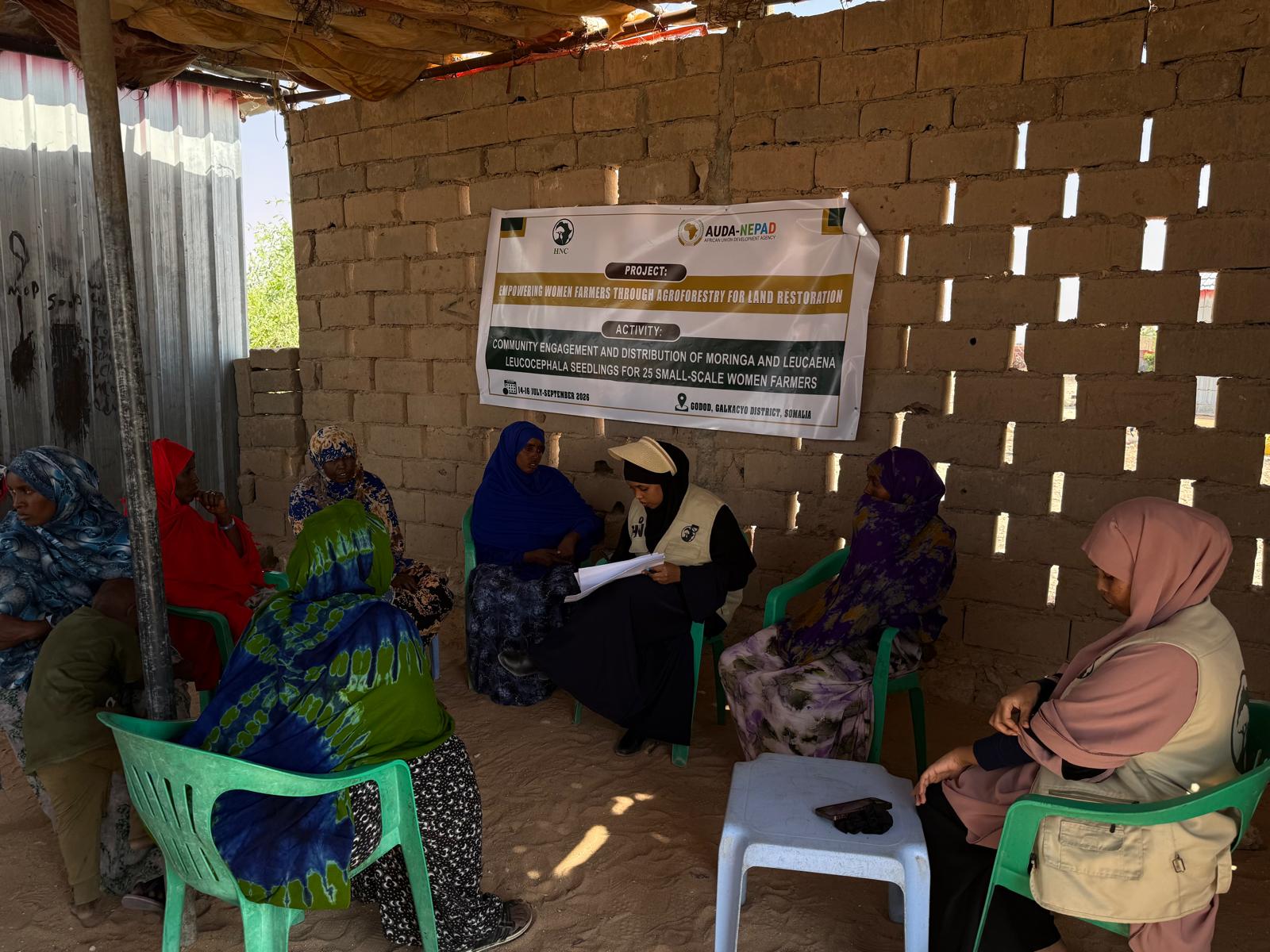
Horn Nature Conservation Distributes 500 Agroforestry Seedlings to Women Farmers in Galkacyo to Advance Landscape Restoration
HNC, with the Ministry of Environment and Climate Change of Puntland and AUDA-NEPAD AFR100 support, distributed 500 Moringa and Le...
Read more
How to Reduce Water Waste in Agriculture: Practical Strategies
Learn how to reduce water waste in agriculture with practical strategies including drip irrigation, soil moisture monitoring, mulc...
Read more
Water Conservation Methods in Agriculture: 10 Effective Ways to Save Water
Discover 10 practical water conservation methods in agriculture, from drip irrigation to rainwater harvesting, to cut water waste,...
Read more